TECHNOLOGY

Boiler concept

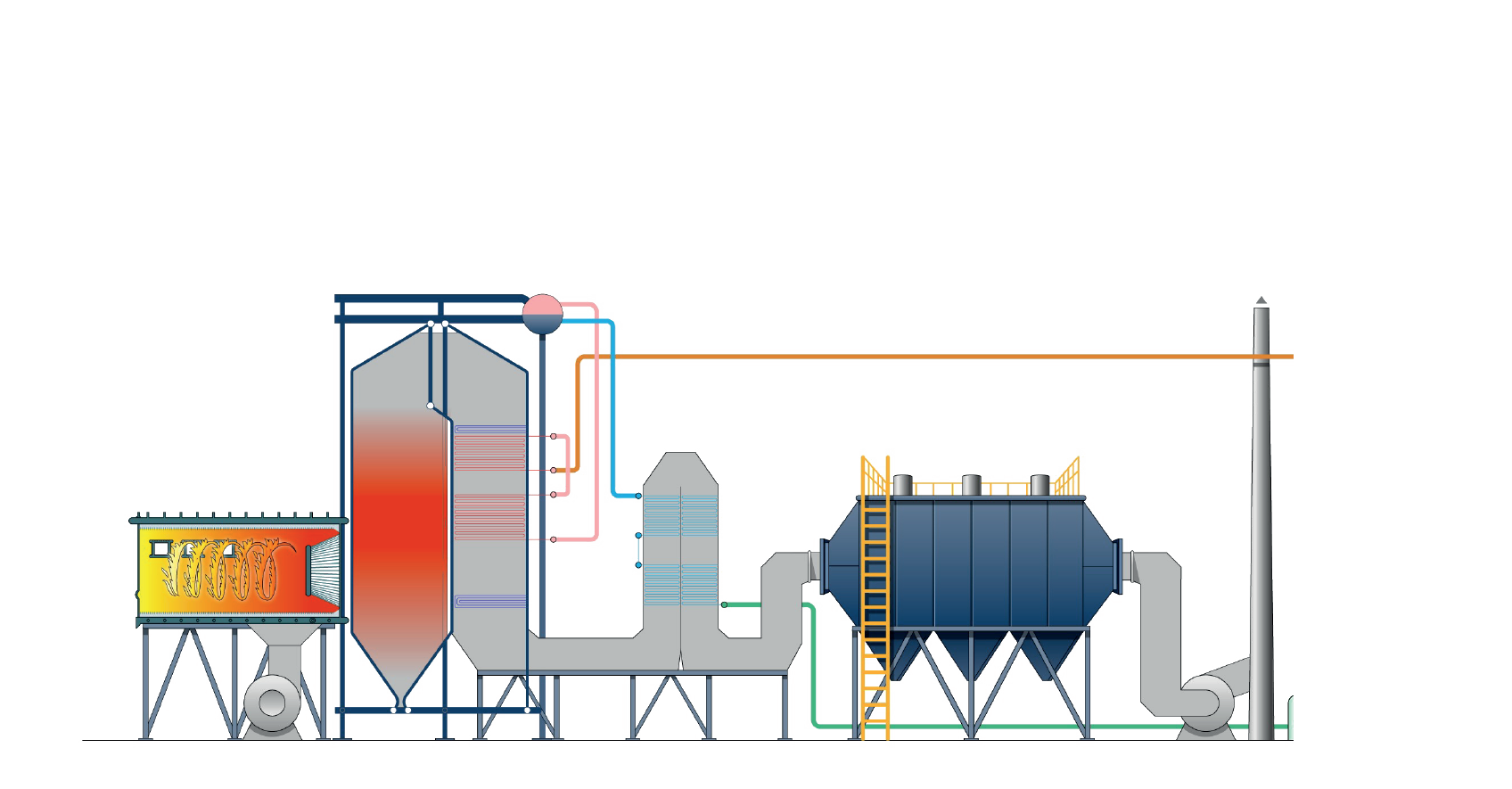
3 PASS BOILER SH & RH
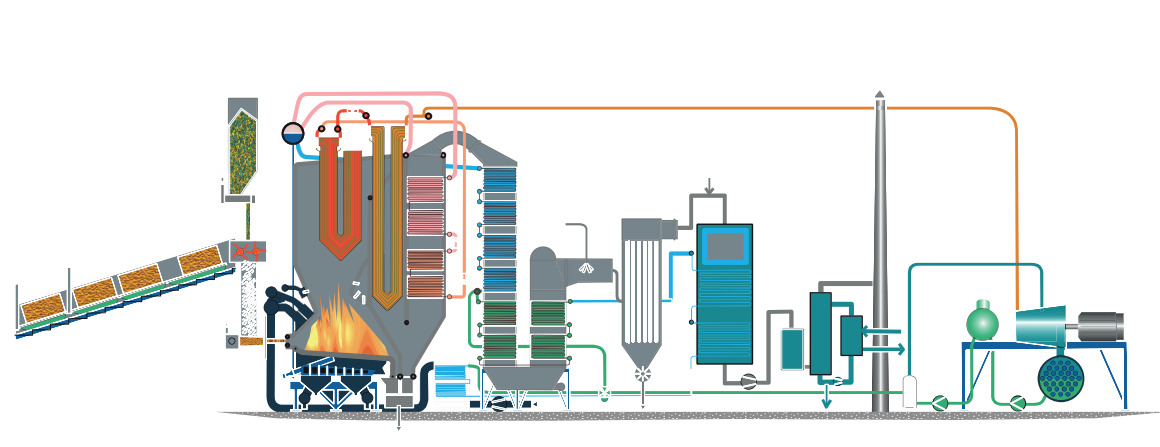
3 PASS BOILER SH & RH

Agricultural Biomass Residue High Alkaline.
Base: Wheat Straw, Rice Straw, Corn Stover, Mustard Husk, Palm Leaves, Sugarcane Top Trash...

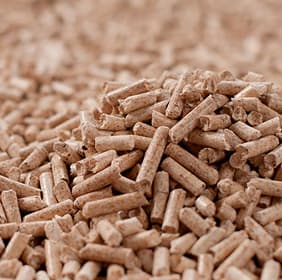
  • Supplement: Wood Chips, Wood Pellets...
  • Fuel: 100% Base & 50% Supplement
  • Type: Three Pass Boiler Design
  • Water Cooled Vibration Grate
  • Double Screw Stoker
  • Combustion Air PreHeating
  • Submerged Bottom Ash Conveyor
  • Flue Gas Treatment with SCR or SNCR

Single Heat

+
  • Sizes: 30, 60, 90, 120 & 150 MWt
  • Fuel Lines: 1, 2, 3, 4 or 5
  • Steam: 110 bara, 540 °C
  • Slagging Pending Super Heater
  • Attemperators: 3

ReHeat

+
  • Sizes: 120 & 150 MWt
  • Fuel Lines: 4 or 5
  • Steam: 140 bara, 540 °C, 540 °C
  • Slagging Pending Super Heater
  • Slagging Pending Re Heater
  • Attemperators: 3+1

2 PASS BOILER SH & RH
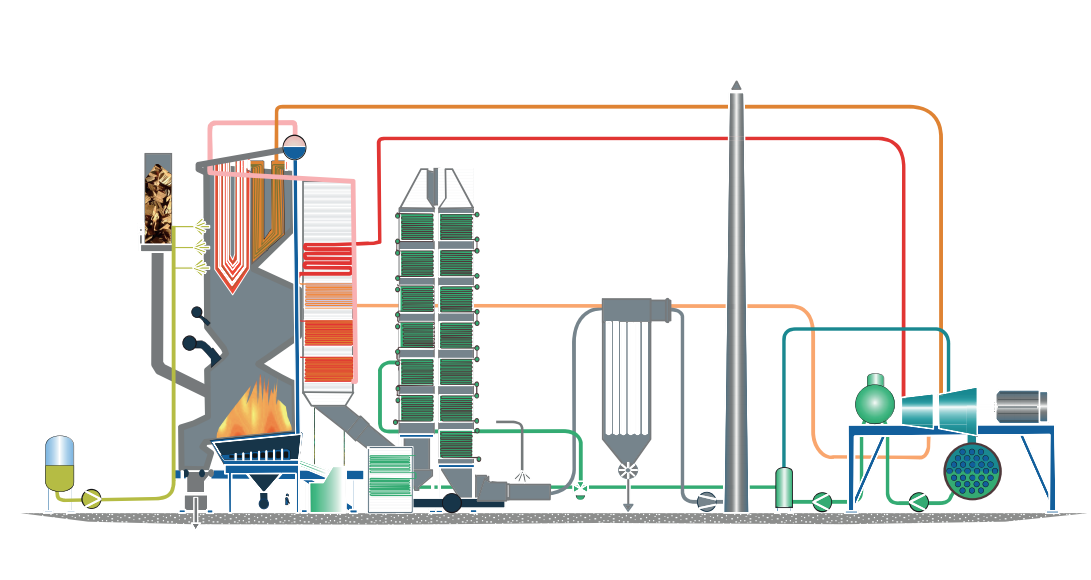
2 PASS BOILER SH & RH

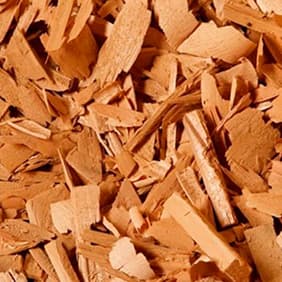
Forest Biomass Residue Low Alkaline.
Base: Wood Chips, Wood Pellets...

  • Supplement: Wood Chips, Wood Pellets...
  • Fuel: 100% Base.
  • Type: Two Pass Boiler Design.
  • Water Cooled Vibration Grate.
  • Spreader Stoker.
  • Combustion Air PreHeating.
  • Primary Air PreHeating FW.
  • Submerged Bottom Ash Conveyor.
  • Flue Gas Treatment with SCR or SNCR

Single Heat

+
  • Sizes: 20, 30, 45, 60, 75, 90, 105, 120, 135 & 150 MWt
  • Fuel Lines: 2, 3, 4, 5, 6, 7, 8, 9 & 10
  • Steam: 110 bara, 540 °C
  • Slagging Pending Super Heater or Empty First Pass
  • Attemperators: 3

ReHeat

+
  • Sizes: 75, 90, 105, 120, 135 & 150 MWt
  • Fuel Lines: 5, 6, 7, 8, 9 & 10
  • Slagging Pending Super Heater
  • Slagging Pending Re Heater
  • Attemperators: 3+1
  • Steam: 140 bara, 540 °C, 540 °

3 PASS BOILER SH
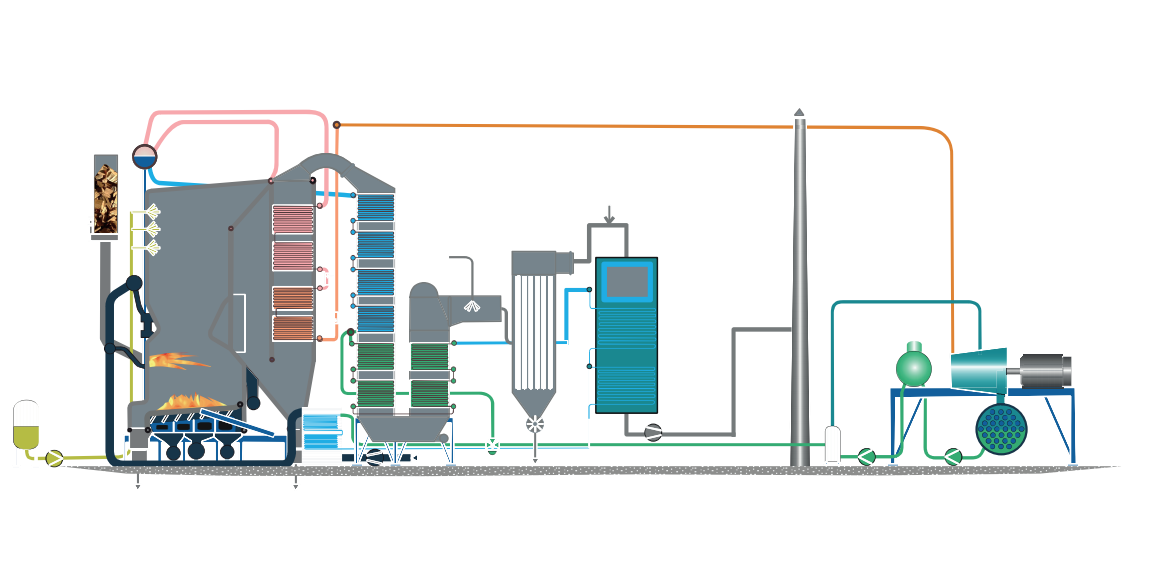
3 PASS BOILER SH

Waste A1/A2/A3/RDF/MSW Low Alkaline.
Base: Waste Wood Chips, Refuse Derived Fuel, Municipal Solid Waste.

  • Fuel: 100% Base
  • Type: Three Pass Boiler Design
  • Water Water Cooled Vibration Grate or Water Cooled Step Grate
  • Furnace Inconel Lining
  • Spreader Stoker or Hydraulic Pushers
  • Combustion Air PreHeating
  • Primary Air PreHeating FW
  • Submerged Bottom Ash Conveyor
  • Flue Gas Treatment with SCR or SNCR
  • WI T2S Compliant

Single Heat

+
  • Sizes: 20, 30, 45, 60, 75, 90, 105, 120, 135 & 150 MWt
  • Fuel Lines: 2, 3, 4, 5, 6, 7, 8, 9 & 10
  • Steam: 110 bara, 470 °C
  • Attemperators: 2

2 PASS BOILER SH

2 PASS BOILER SH

Industrial Biomass Residue Low Alkaline.
Base: Wood Dust, Sunflower Husk, Meat & Bone Meal...

  • Fuel: 100% Base
  • Type: Two Pass Boiler Design
  • Cyclonic Combustion Chamber
  • Pneumatic Fuel Injection
  • Combustion Air PreHeating
  • Water Cooled Bottom Ash Conveyor
  • Flue Gas Treatment with SCR or SNCR

Single Heat

+
  • Sizes: 20, 40, 60 & 80 MWt
  • Fuel Lines: 1 & 2
  • Steam: 100 bara, 450 °C
  • Attemperators: 2

Combustion System

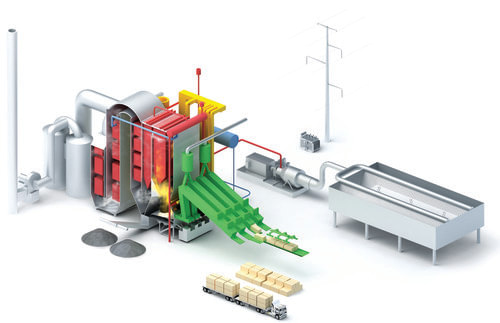
1. Water-Cooled Vibrating Grate:

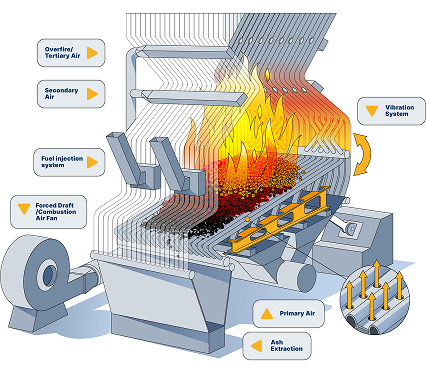
The Water-Cooled Vibrating Grate (WCVG) is a proprietary BWE design, available in sizes from 30 to 150 MWt. The design can be adapted to customer requirements and optimized for specific fuels such as wheat straw, rice straw, corn stover, mustard husk, palm leaves, sugarcane bagasse, wood chips and more. Specific fuel feeding systems are adapted according to the type of fuel used.

The WCVG is an integrated part of the evaporator. Primary air is introduced below the grate, representing 30% of the combustion air. The remaining 70% is introduced as ignition air, secondary air and overfire air, allowing staged combustion for superior control of NOx formation. The WCVG offers high availability and low maintenance costs.

Water-Cooled Vibrating Grate
2. Cyclonic Combustion Chamber:

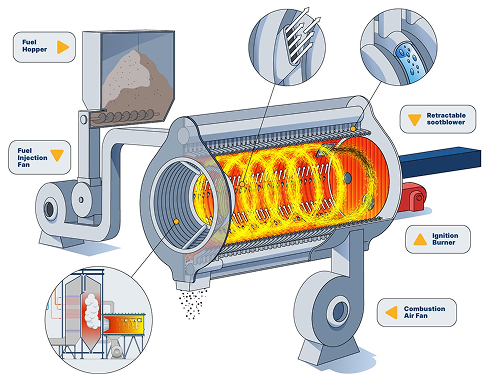
The Cyclonic Combustion Chamber (CCC) is a proprietary BWE design, available in sizes from 10 to 40 MWt. The design can be adapted to customer requirements and optimized for fine fuels such as sawdust, sunflower husk and meat and bone meal.

The horizontally oriented, water-cooled Cyclonic Combustion Chamber is an integral part of the evaporator. The fuel is pneumatically transported to the combustion chamber and enters tangentially. Air nozzles generate cyclonic movement within the combustion chamber, improving residence time, turbulence, temperature distribution and combustion efficiency. The CCC offers high availability and low maintenance costs.

Cyclonic Combustion Chamber
3. Multi-Fuel Burner:

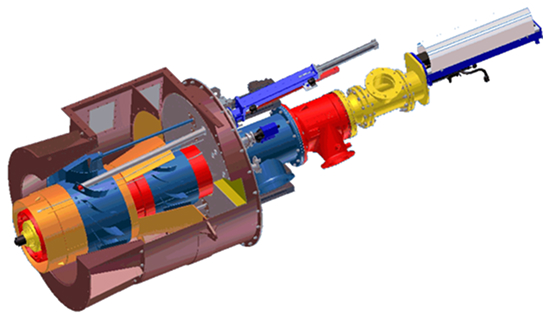
The Multi-Fuel Burner (MFB) is a proprietary BWE design, available in sizes from 15 MWt to 100 MWt. The design can be adapted to customer requirements, including fuel flexibility, staged air combustion and adjustable swirl.

The Multi-Fuel Burner can be designed for natural gas, heavy fuel oil, light fuel oil, coal dust or wood dust. All fuels can be used in a single unit with automated transition. Fuels are individually controlled to obtain optimal flame shape, stability and temperature, as well as ultra-low NOx and CO formation. Staged air combustion is key and involves stratification of primary, secondary and tertiary air, over burner air (OBA) and overfire air (OFA). This applies to all boilers, burner configurations and combustion air designs.

Multi-Fuel Burner
4. Step-Grate:

The Step-Grate system is a robust and proven solution for the thermal conversion of challenging solid fuels, including refuse-derived fuel (RDF), solid recovered fuel (SRF), municipal solid waste (MSW), waste wood (A1/A2/A3), and other mixed waste fuels. The technology is designed to ensure stable combustion, high availability, and excellent fuel flexibility, and is available in thermal capacities ranging from 20 to 60 MWt.

The grate consists of a series of stepped, moving rows made of durable cast elements that gradually convey the fuel through distinct combustion zones. Depending on fuel characteristics and plant requirements, the system can be configured with either air-cooled or water-cooled grates, ensuring reliable operation and long service life under demanding conditions.

Step-Grate

Bale Handling System

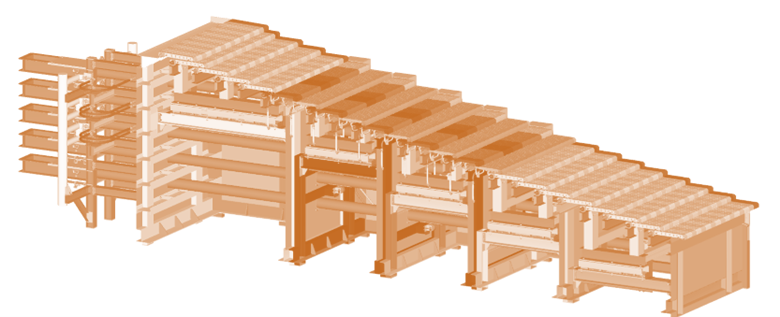
1. Warehouse Management System

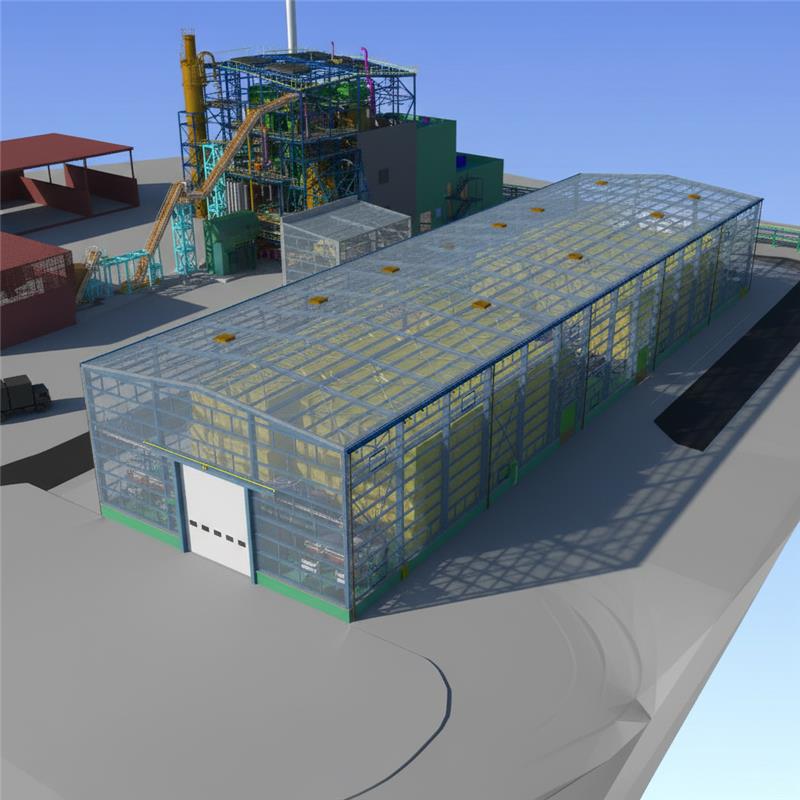
BWE offers a complete automated fuel handling system for baled fuel, from reception in the warehouse to feeding the boiler. Warehouse Management is key and consists of a Supplier & Supply Identification Station (SSID), a SQL Database, and a Warehouse Management Software. The SSID registers the supplier and stores the data in the SQL Database.

The roof crane lifts a supply of 12 bales directly from the truck (fully automatic) or from the floor (semi-automatic) and places them in the warehouse at a specified position provided by the Warehouse Management Software. The crane measures the weight and moisture content of the bales during lifting and links the data to the supplier already registered in the SQL Database. The Warehouse Management System (WMS) also ensures that the reception conveyor is continuously replenished.

Water-Cooled Vibrating Grate

2. Bale Conveyor System

BWE offers a complete automated Bale Conveyor System for baled fuel, from reception in the warehouse to feeding the boiler. The first component in the automated line is the Reception Conveyor. The Reception Conveyor holds 12, 24, or 36 bales in waiting, depending on plant size. A Transfer Conveyor receives two bales and delivers them one by one to the feeding line requesting fuel.

A Weighing Conveyor measures the weight and moisture content of each individual bale, which is required for boiler operation. Next, the bales enter the Air Lock Conveyor, followed by two Buffer Conveyors. The String Cutter Conveyor then cuts the twines, followed by the Dosing Conveyor, which pushes the bales towards the Bale Opener, loosening the bales. From the Bale Opener, the fuel and twines drop into the Double Screw Stoker.

Cyclonic Combustion Chamber

Complex Biomass

Tap the icons to see more details

Hover over the icons to see more details

Rice straw

Agricultural Biomass Residue

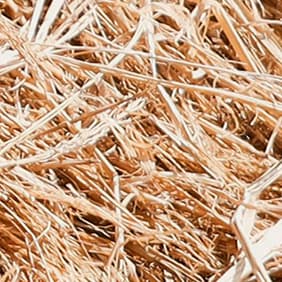
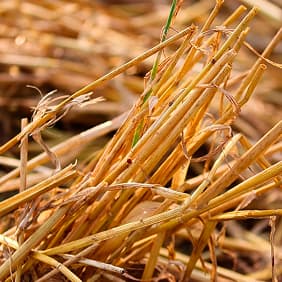
Agricultural Biomass Residues originate from farming and crop production activities and include fuels such as straw, stalks, and prunings generated during harvesting and processing of agricultural products. These fuels are typically seasonal and often present higher ash or alkali content, as well as variable moisture levels. These unique characteristics make agricultural residues the most complex and challenging biomass fuels to be combusted in a sustainable and efficient manner, requiring specially designed combustion systems.

Rice straw

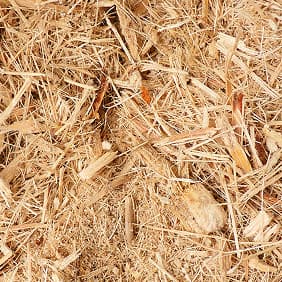
Cereal straw

Agricultural Biomass Residue

Agricultural Biomass Residues originate from farming and crop production activities and include fuels such as straw, stalks, and prunings generated during harvesting and processing of agricultural products. These fuels are typically seasonal and often present higher ash or alkali content, as well as variable moisture levels. These unique characteristics make agricultural residues the most complex and challenging biomass fuels to be combusted in a sustainable and efficient manner, requiring specially designed combustion systems.

Cereal straw

Corn residue

Agricultural Biomass Residue

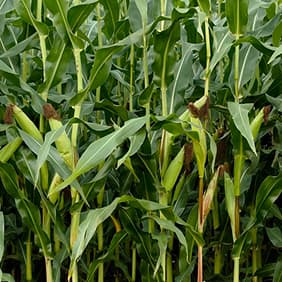
Agricultural Biomass Residues originate from farming and crop production activities and include fuels such as straw, stalks, and prunings generated during harvesting and processing of agricultural products. These fuels are typically seasonal and often present higher ash or alkali content, as well as variable moisture levels. These unique characteristics make agricultural residues the most complex and challenging biomass fuels to be combusted in a sustainable and efficient manner, requiring specially designed combustion systems.

Corn residue

Cotton stalks

Agricultural Biomass Residue

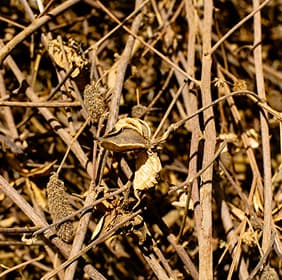
Agricultural Biomass Residues originate from farming and crop production activities and include fuels such as straw, stalks, and prunings generated during harvesting and processing of agricultural products. These fuels are typically seasonal and often present higher ash or alkali content, as well as variable moisture levels. These unique characteristics make agricultural residues the most complex and challenging biomass fuels to be combusted in a sustainable and efficient manner, requiring specially designed combustion systems.

Cotton stalks

Palm leaves

Agricultural Biomass Residue

Agricultural Biomass Residues originate from farming and crop production activities and include fuels such as straw, stalks, and prunings generated during harvesting and processing of agricultural products. These fuels are typically seasonal and often present higher ash or alkali content, as well as variable moisture levels. These unique characteristics make agricultural residues the most complex and challenging biomass fuels to be combusted in a sustainable and efficient manner, requiring specially designed combustion systems.

Palm leaves

Nut shell

Industrial Biomass Residue

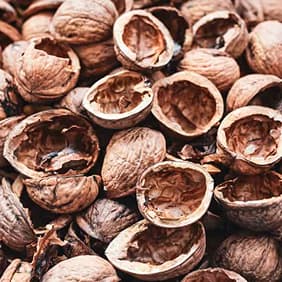
Industrial Biomass Residues are by-products from agro-industrial and processing activities. Typical examples include sunflower and rice husks, olive pomace and bagasse. Compared to agricultural residues, these fuels generally exhibit more consistent quality and particle size. However, they present specific fuel-related characteristics—such as ash behavior, fouling potential, or moisture variability—that must be properly understood and addressed in the combustion system design to ensure efficient, stable, and reliable operation.

Nut shell

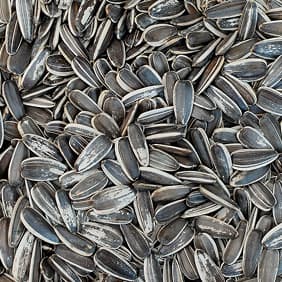
Sunflower husk

Industrial Biomass Residue

Industrial Biomass Residues are by-products from agro-industrial and processing activities. Typical examples include sunflower and rice husks, olive pomace and bagasse. Compared to agricultural residues, these fuels generally exhibit more consistent quality and particle size. However, they present specific fuel-related characteristics—such as ash behavior, fouling potential, or moisture variability—that must be properly understood and addressed in the combustion system design to ensure efficient, stable, and reliable operation.

Sunflower husk

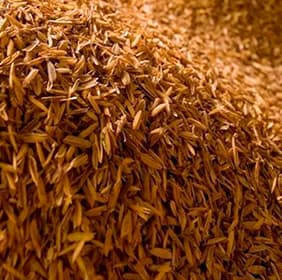
Rice husk

Industrial Biomass Residue

Industrial Biomass Residues are by-products from agro-industrial and processing activities. Typical examples include sunflower and rice husks, olive pomace and bagasse. Compared to agricultural residues, these fuels generally exhibit more consistent quality and particle size. However, they present specific fuel-related characteristics—such as ash behavior, fouling potential, or moisture variability—that must be properly understood and addressed in the combustion system design to ensure efficient, stable, and reliable operation.

Rice husk

Olive pomace

Industrial Biomass Residue

Industrial Biomass Residues are by-products from agro-industrial and processing activities. Typical examples include sunflower and rice husks, olive pomace and bagasse. Compared to agricultural residues, these fuels generally exhibit more consistent quality and particle size. However, they present specific fuel-related characteristics—such as ash behavior, fouling potential, or moisture variability—that must be properly understood and addressed in the combustion system design to ensure efficient, stable, and reliable operation.

Olive pomace

Bagasse

Industrial Biomass Residue

Industrial Biomass Residues are by-products from agro-industrial and processing activities. Typical examples include sunflower and rice husks, olive pomace and bagasse. Compared to agricultural residues, these fuels generally exhibit more consistent quality and particle size. However, they present specific fuel-related characteristics—such as ash behavior, fouling potential, or moisture variability—that must be properly understood and addressed in the combustion system design to ensure efficient, stable, and reliable operation.

Bagasse

Wood residue

Forest Biomass Residue

Forest Biomass Residues originate from forestry operations and forest management activities. They include logging residues such as branches, treetops, thinning material, and low-grade wood not suitable for timber or pulp production. These fuels typically present higher moisture content but low ash levels, making them well suited for stable combustion when properly handled and prepared. When sourced from responsibly managed forests, forest biomass residues represent a sustainable and reliable renewable fuel for energy generation.

Wood residue

Wood pellets

Forest Biomass Residue

Forest Biomass Residues originate from forestry operations and forest management activities. They include logging residues such as branches, treetops, thinning material, and low-grade wood not suitable for timber or pulp production. These fuels typically present higher moisture content but low ash levels, making them well suited for stable combustion when properly handled and prepared. When sourced from responsibly managed forests, forest biomass residues represent a sustainable and reliable renewable fuel for energy generation.

Wood pellets